Food Safety & Accountability
The real-world cost of missed restaurant line checks
Health-inspection reports repeatedly surface ordinary operating failures: unsafe temperatures, dirty equipment, poor storage, missing labels, blocked hand sinks, and pests. A short daily check gives the team a chance to find and correct those conditions before someone else does.
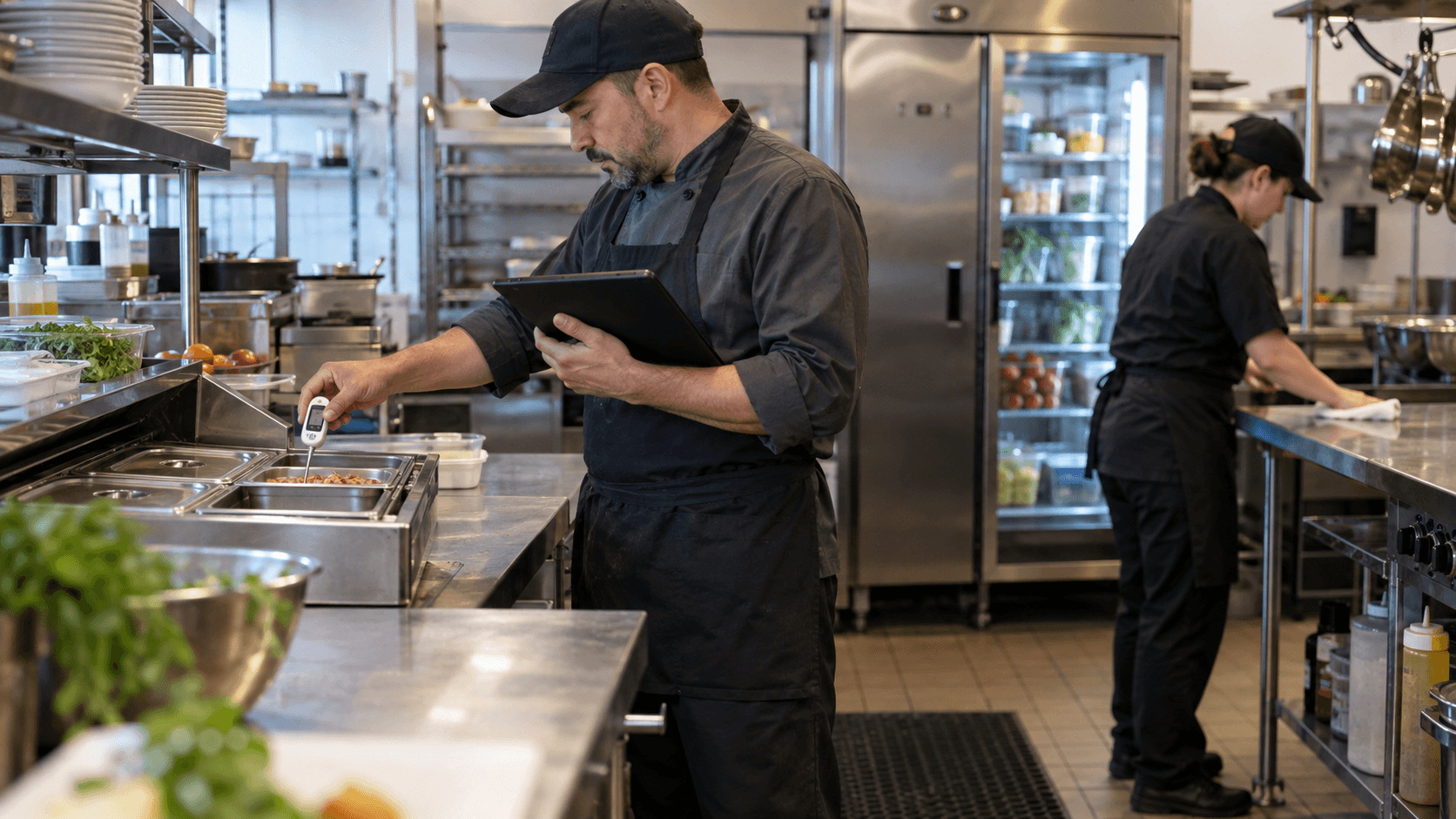
A daily line check is not paperwork for its own sake. It is a controlled pause in the shift: measure what matters, identify what is wrong, assign a correction, and verify the result. When that pause disappears, small misses can remain invisible until a guest, employee, or health inspector discovers them.
What real inspection findings look like
A 2026 Mashed review examined more than 3,700 fast-food locations across Atlanta, Chicago, Las Vegas, and New York. Its examples included unsafe holding temperatures, unsanitized food surfaces, dirty equipment, pest evidence, plumbing problems, unlabeled sauces, mold, and blocked drains. The review also supplied important context: 94% of the locations surveyed passed their latest inspection with the highest available score, and the serious problems were location-specific rather than evidence of a chainwide pattern. Mashed inspection review
Delish likewise cautioned that the incidents it discussed were mostly tied to individual locations. Its examples included improperly stored produce, missing cooler thermometers, insufficiently cleaned ice machines, dirty prep and storage areas, cross-contamination concerns, insects, spoiled produce, mold, and water leaks. Delish restaurant-cleanliness review
The consequences move beyond the inspection score
A violation can create an immediate food-safety risk, but the business impact may keep expanding: discarded product, emergency repairs, manager time, reinspection, fines, interrupted service, temporary closure, legal exposure, and lost customer confidence. CloudKitchens identifies fines, temporary or permanent shutdown, reputational harm, lost trust, and reduced revenue among the potential consequences of health-code violations. CloudKitchens violation guide
The human consequence is more important. Unsafe food handling and poor sanitation can contribute to illness. A checklist cannot eliminate every hazard, but it can make routine controls visible at the moment they matter and give employees a clear path to stop, report, and correct a failure.
Turn the headlines into daily controls
The useful question is not “Could this happen here?” Any busy operation can drift. The useful question is “What would help this shift find it early?”
Temperature control
Inspection risk: Food held outside an approved range or a cooler without a working thermometer.
Daily control: Record actual product and equipment readings, then document the approved corrective action for every exception.
Storage and labels
Inspection risk: Unlabeled food, expired product, or raw food stored where it can contaminate ready-to-eat items.
Daily control: Verify date marks, shelf life, container condition, separation, and storage location every shift.
Cleaning and sanitation
Inspection risk: Dirty food-contact surfaces, ice machines, drains, floors, or equipment.
Daily control: Name the surface and standard, assign an owner, and require verification after a failed result.
Handwashing access
Inspection risk: A hand sink used for storage or missing soap, towels, hot water, or access.
Daily control: Confirm each sink is accessible, supplied, and used only for handwashing before service begins.
Pest indicators
Inspection risk: Flies, cockroaches, rodents, standing water, food debris, or gaps that support pest activity.
Daily control: Inspect vulnerable areas, escalate evidence immediately, and retain the corrective-action record.
Manager follow-through
Inspection risk: A problem is noticed but no owner, response, or verification is recorded.
Daily control: Route failed items to a manager and close them only after the correction is verified.
Why “daily” matters
A passing inspection is a snapshot. Conditions change with deliveries, staffing, equipment load, rush periods, cleaning, and shift handoffs. The Mashed analysis found that most surveyed restaurants performed well while still documenting serious failures at particular locations. That contrast is exactly why local, repeated verification matters: a strong brand standard does not automatically prove that today's cold line, hand sink, or closing clean was handled correctly.
Daily does not mean every item must be checked only once. High-risk controls may need verification at opening, before a meal period, during a shift, and at close. The schedule, thresholds, and corrective actions should match the restaurant's process and the food code adopted by its jurisdiction.
A completed checklist is not the goal
A rushed row of checkmarks can create false confidence. Strong line checks ask for observable or measured answers, record who performed the work and when, flag exceptions immediately, and preserve the response. Managers then review patterns across days and locations instead of waiting for a public failure to reveal them.
That is where a digital restaurant line-check system adds practical value: it can make assignments, timestamps, measurements, failed items, corrections, and recurring trends visible without asking a manager to reconstruct the shift from memory or a binder.
Sources and further reading
- 5 Fast Food Chains That Rack Up Some of the Most Serious Health Inspection Violations
Mashed · July 18, 2026
- 10 Common Restaurant Health Code Violations & How to Prevent Them
CloudKitchens · June 14, 2026
- These Are Hands Down the Dirtiest Restaurant Chains in America
Delish · September 24, 2025
Source note: The reports referenced here document inspection findings, outbreaks, lawsuits, and closures. They do not establish that missing daily line checks caused each incident. They illustrate conditions a well-designed check may help teams detect, escalate, and document sooner.
This article provides general operational information, not legal or food-safety advice. Follow your local health authority's rules and use limits, schedules, and corrective actions approved for your operation.